
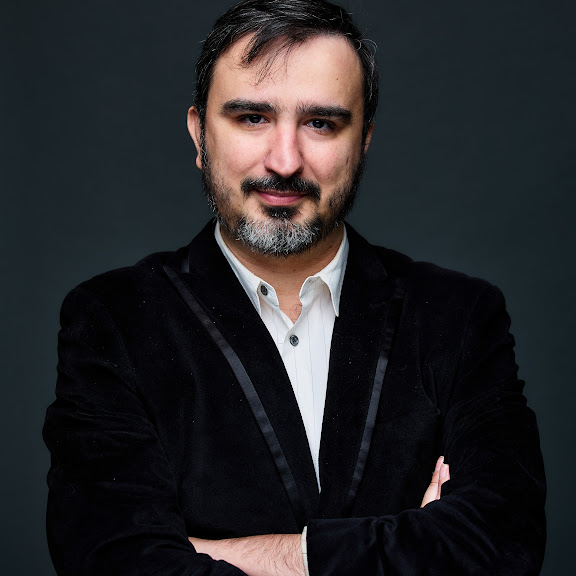
For 37 years, Shahin navigated a labyrinth of misdiagnoses, collecting fragmented data points that traditional medicine could not connect. His breakthrough came not from a clinic, but from his own computational analysis of his genome, which identified a critical mutation in TBX1 orchestrating conditions that ten specialists had treated as unrelated. This personal odyssey revealed a fundamental truth: patients are the most underutilized sensors in the healthcare system.
As a scientist, Shahin spent over two decades pioneering AI for cellular biology at the world's leading institutions. At the Broad Institute of MIT and Harvard, and later at insitro and GenBio AI, he developed the computational methods needed to model cellular states, decode biological networks, and map the high-dimensional geometry of disease. His work has been published in Nature, Science, and Cell, with over 4,000 citations across 40+ publications establishing foundational approaches for single-cell atlas construction and network biology.
Now, through the Cytognosis Foundation, Shahin is building the Global Positioning System for Health to ensure that no other patient waits decades for answers that AI could provide today. His work bridges the gap between the "n=1" experience of the patient and the "n=millions" scale of population health, transforming reactive treatment into proactive, personalized health navigation.